
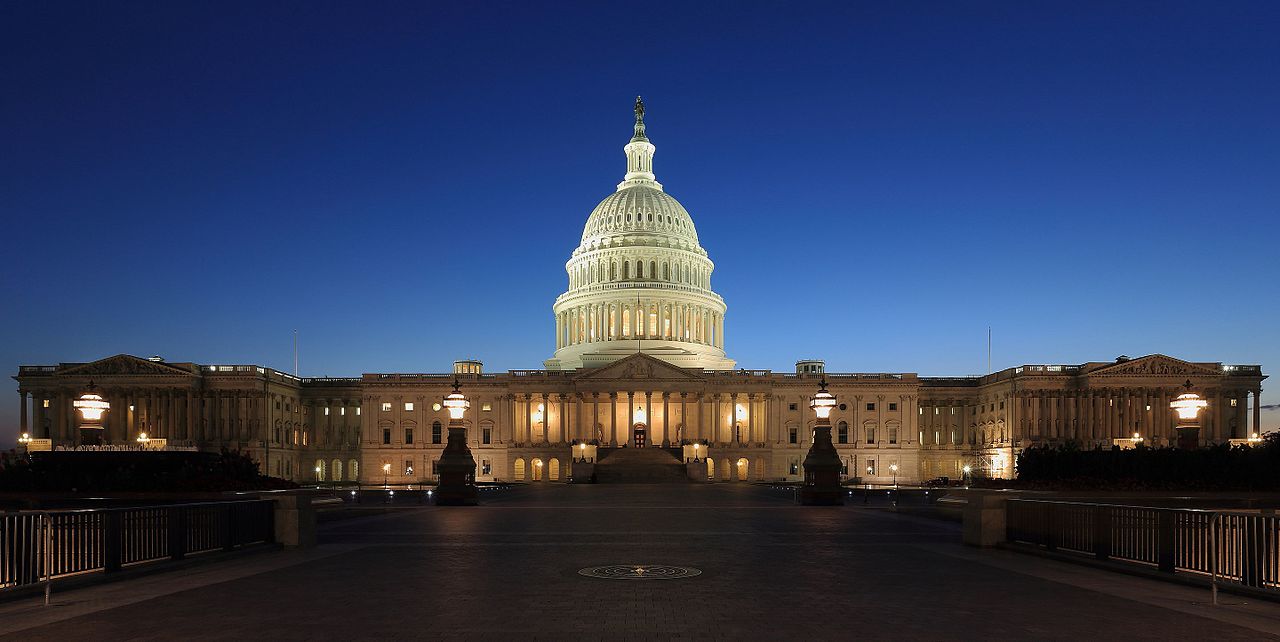
The U.S. Capitol at dusk. (Image: Martin Falbisoner / Wikimedia Commons — CC BY-SA 3.0)
The US budget deficit grew to almost $2 trillion over the past year, government data showed Friday, reaching its highest level since 2021 despite President Donald Trump's promises to cut public spending.
The federal deficit, which occurs when government spending exceeds its revenues, rose to $1.99 trillion in fiscal year 2026, the Treasury Department said. This marked a 12 percent increase from the prior year, when the shortfall came in at $1.78 trillion. It was the third-largest annual deficit in US history and the first full fiscal year of Trump's second term.
The expansion comes amid growing worries over the massive $40.3 trillion US debt load and rising inflation, as the cost of borrowing climbs. A key driver of expenditures was the rising interest paid on public debt, which jumped $144 billion — up 12 percent — to a record $1.36 trillion, second only to Social Security and the Medicare and Medicaid health programmes among federal outlays.
Interest costs on around $32 trillion in publicly held US debt have been ballooning in recent years, and climbing bond yields have sparked further concerns. Treasury bond yields influence the interest rates households pay on mortgages and auto loans, adding to cost-of-living pressures on US voters ahead of November's midterm elections.
Overall, government revenues climbed by 3 percent to $5.40 trillion in the fiscal year, which ended September 30. But spending rose faster, increasing by 6 percent to $7.40 trillion. Defence spending alone reached $917 billion, up 6 percent from the previous year, according to the Treasury data, though a Treasury official said it was not yet possible to determine how much of the increased spending related to military operations in the Middle East.
Meanwhile, an expected influx of revenue from Trump's sweeping tariffs has failed to fully materialise during his second term. The Supreme Court struck down his global duties in February, triggering a wave of refunds. Treasury data reflected $145 billion in customs refunds over the year — primarily due to tariffs — erasing significant gains from the duties.
Analysts expect the deficit to remain near $2 trillion in the coming year. "The deficit will likely be similar for the next year," said Nancy Vanden Houten of Oxford Economics, pointing to the structural gap between federal spending commitments and tax revenue.